Arrabbiata vs. Amatriciana: The Roman Red Sauce Showdown
An empirical food-science throwdown pitting fire-breathing allium against cured pork lipids to crown Rome's ultimate tomato sauce.
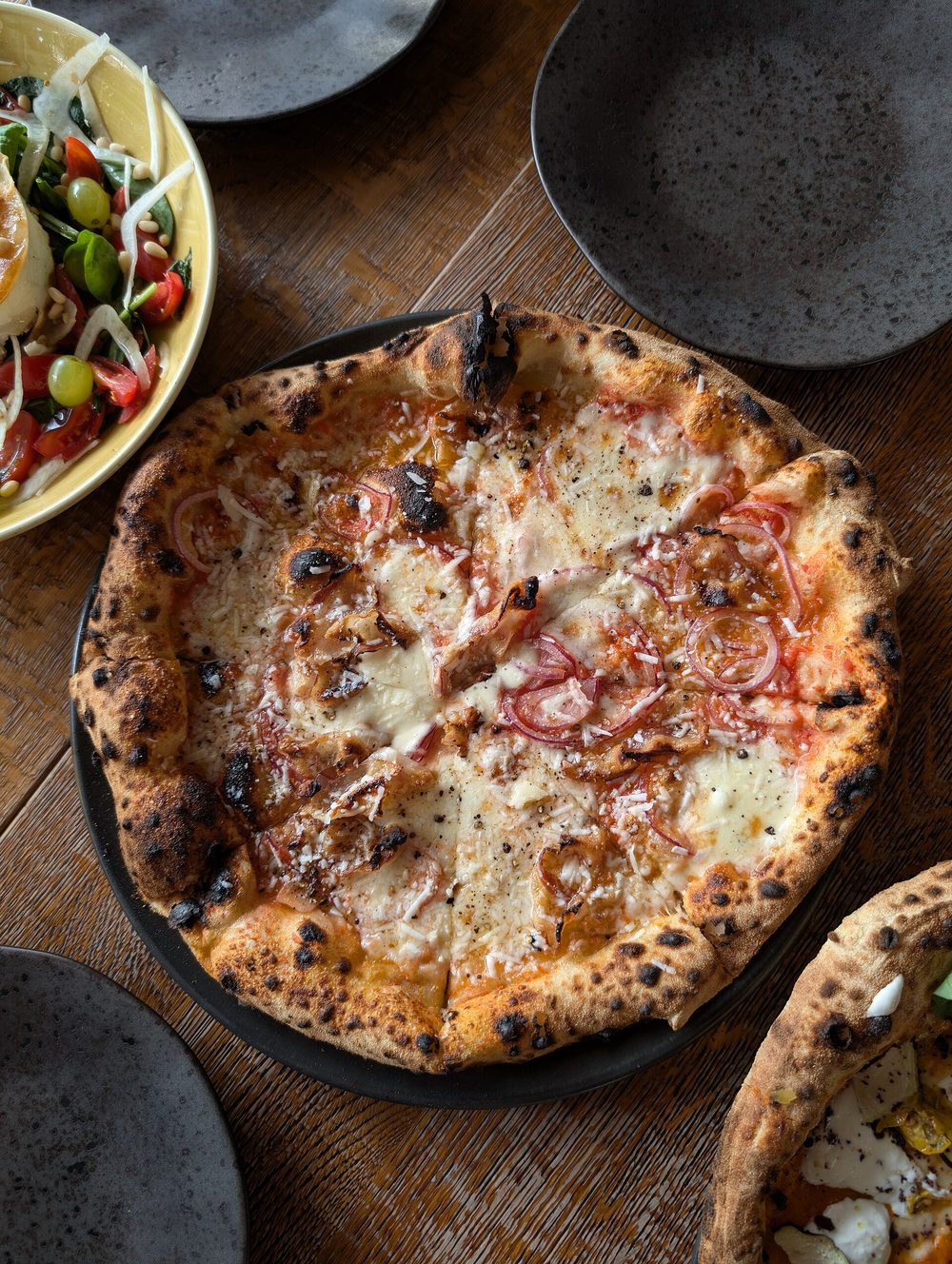
Tale of the Tape: The Roman Contenders
In the arena of Roman pasta dominance, two heavyweights emerge from the crucible of the Eternal City’s pantheon: Sugo all’Arrabbiata and Sugo all’Amatriciana. While Carbonara and Cacio e Pepe fight their dry-heat dairy skirmishes, these two contenders rely on the acidic, lycopene-rich canvas of the Solanaceae family—the plum tomato—to drive their culinary philosophy.
In the red corner stands Arrabbiata, literally translated as ‘angry.’ Born as an early-twentieth-century Roman rebellion, it is a minimalist exercise in aggressive volatility: high-polyphenol extra virgin olive oil, scorched allium compounds, and concentrated capsaicinoids suspended in reduced tomato pectin. In the opposing corner stands Amatriciana, a historic leviathan hailing from the mountainous border town of Amatrice. Amatriciana carries rustic gravitas, deploying cured pork jowl (guanciale), dry wine deglazing, and the sharp, enzymatic funk of Pecorino Romano.
This is not merely a clash of heat against meat. This is a thermodynamic and biochemical battle of lipid profiles, emulsification vectors, and flavor compound solubilities.
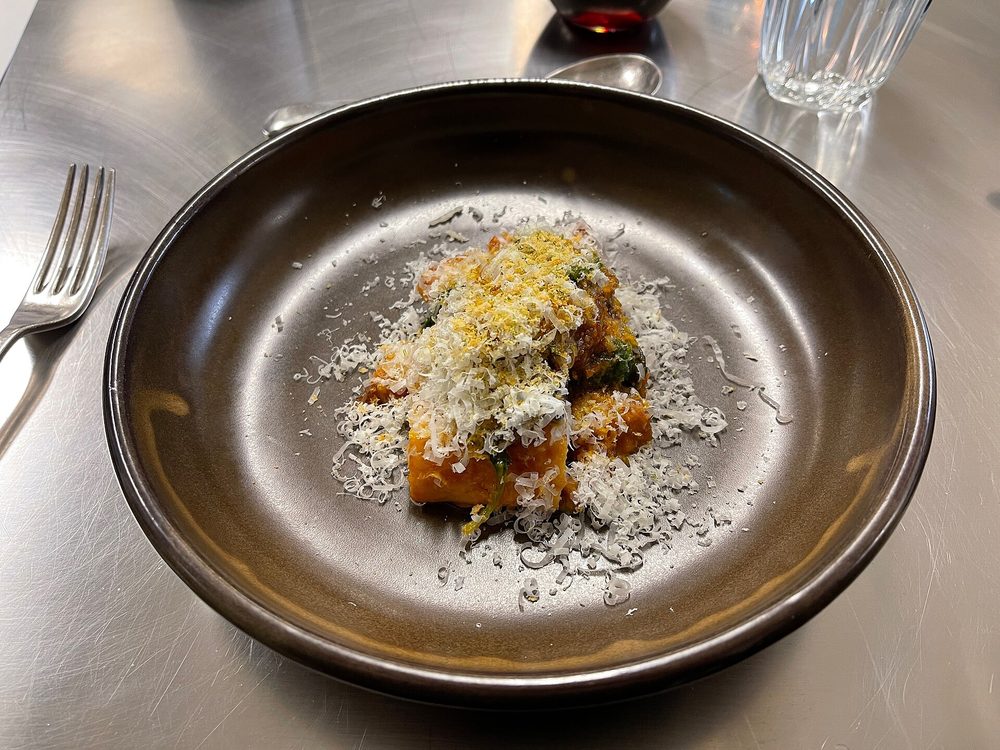
Fighter 1 Breakdown: The Capsaicin Heat of Sugo all’Arrabbiata
Sugo all’Arrabbiata achieves its lethality through targeted chemical simplicity. The engine of the sauce relies on two volatile inputs: crushed red pepper flakes (Capsicum annuum) and thinly shaved or crushed garlic (Allium sativum), bloomed gently in extra virgin olive oil.
       [ Mechanical Damage / Slicing ]
                      │
                      ▼
Alliin ───[ Alliinase Activation ]───► Allicin (Unstable)
                                           │
                                  [ Controlled Heat ]
                                           ▼
                            Diallyl Disulfide & Ajoene
                                (Savory Lipid Bloom)
When garlic tissues are ruptured, the vacuolar enzyme alliinase cleaves the cytosolic amino acid alliin to generate allicin. Allicin rapidly decomposes into pungent diallyl disulfide and diallyl trisulfide. In Arrabbiata, this process must be executed under strict thermodynamic surveillance. Overheating garlic past 140°C triggers the thermal breakdown of sugars and sulfur compounds into acrolein and harsh, bitter furans. The allium must gently infuse the olive oil below its smoke point, creating an aromatic lipid reservoir.
Simultaneously, capsaicin (8-methyl-N-vanillyl-6-nonenamide) is extracted. Because capsaicin is a lipophilic, nonpolar alkaloid, it is poorly soluble in aqueous tomato juice, but dissolves readily into warm olive oil triacylglycerols. Bloomed in fat, capsaicin integrates seamlessly into the sauce matrix rather than floating as an uncalibrated surface film.
When canned San Marzano tomatoes are crushed into this spiced lipid base, the natural fruit pectins hydrate and gelatinize, while free citric and malic acids establish a low pH (typically 4.2 to 4.5). This high acidity sharpens the neurochemical bite of the capsaicin on the palate’s TRPV1 heat-sensing receptors, producing the definitive, clean, sharp ‘anger’ that defines the dish.
Fighter 2 Breakdown: The Rendered Riches of Sugo all’Amatriciana
Sugo all’Amatriciana rejects vegetal monounsaturated fats in favor of saturated, cured porcine gold: guanciale. Sliced from the pig’s jowl, guanciale possesses a lean-to-fat distribution skewed dramatically toward cross-hatched, collagen-rich intramuscular adipose tissue.
The execution begins cold. As the pan temperature slowly crests through 60°C to 100°C, the saturated and monounsaturated fatty acids (principally oleic, palmitic, and stearic acids) render liquid, escaping their cellular vacuoles. As moisture drives off and local surface temperatures surpass 140°C, the lean striated meat begins the Maillard reaction. Reducing sugars and free amino acids recombine into hundreds of pyrazines, furans, and thiophenes, yielding the unmistakable savory crust.
Guanciale Rendering (60°C–100°C)
      │
      ▼
Evaporative Moisture Loss (100°C+)
      │
      ▼
Maillard Synthesis (140°C–160°C) ──► Melanoidins & Cured Pyrazines
      │
      ▼
Deglazing with Dry White Wine ────► Alcohol extraction of lycopene
                                      & esterification of volatile acids
At peak crispness, the pork is typically extracted, leaving behind a pool of savory lard. This rendered lipid is deglazed with a splash of dry white wine. The ethanol functions as an essential co-solvent, extracting alcohol-soluble aromatic esters from both the cured pork residue and subsequent tomato additions that water or fat alone cannot mobilize.
Once tomatoes simmer within this pork-fat matrix, the sauce gains profound savory depth. The coup de grâce is the final inclusion of Pecorino Romano. Aged sheep’s milk cheese introduces free glutamates, inosinate synergists, and short-chain fatty acids (like butyric and caproic acid), elevating the total umami threshold exponentially past that of any pure vegetal sauce.
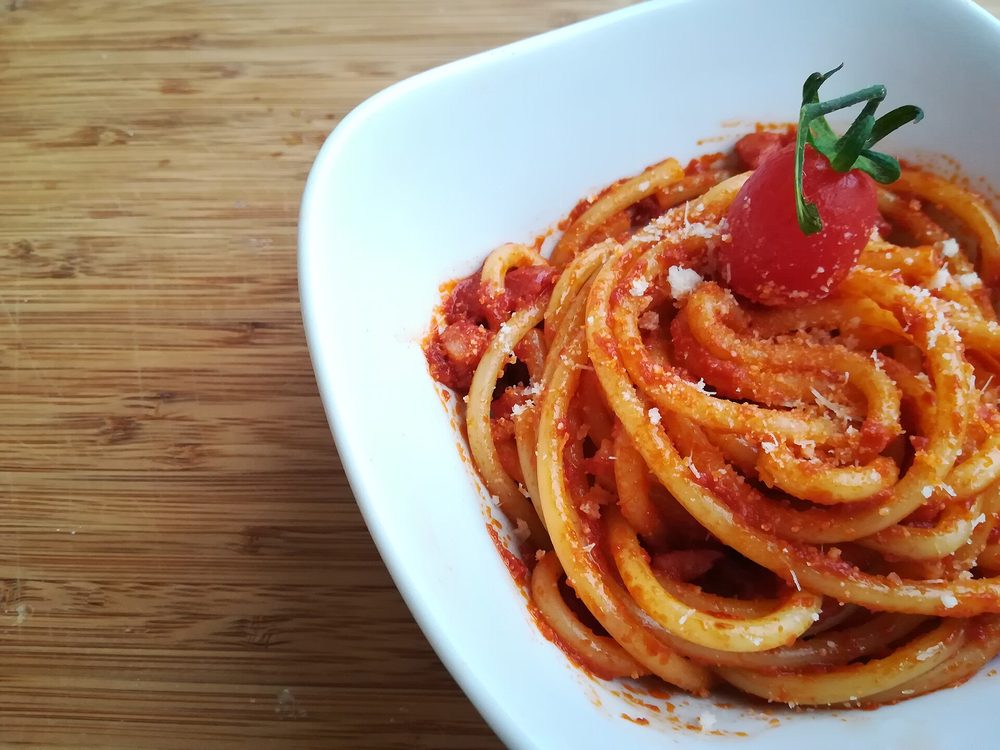
Tale of the Metrics: Head-to-Head Analytical Breakdown
To determine how these sauces operate on structural, biochemical, and sensory axes, we run both formulas through the analytical gauntlet.
| Metric | Sugo all’Arrabbiata | Sugo all’Amatriciana | Advantage |
|---|---|---|---|
| Primary Lipid Base | Triacylglycerols (Extra Virgin Olive Oil) | Rendered Pork Lard (Saturated/Monounsaturated) | Amatriciana (Viscosity & Body) |
| Primary Flavor Driver | Capsaicin & Diallyl Disulfide | Cured-Pork Pyrazines & Hexanal | Amatriciana (Aromatic Complexity) |
| Active Umami Density | ~140 mg/100g (Naturally occurring in tomatoes) | ~850 mg/100g (Tomato + Guanciale + Pecorino) | Amatriciana (6x Umami Multiplier) |
| pH Level | 4.2 – 4.4 (Sharply Acidic) | 4.6 – 4.8 (Buffered by Animal Fat/Proteins) | Arrabbiata (Vibrant Cleanliness) |
| Alcohol Extraction Phase | Absent (Strictly aqueous/lipid extraction) | Present (Ethanol deglaze unlocks esters) | Amatriciana (Solvent Breadth) |
| Emulsion Stability | Pectin-Oleic Suspension (Fragile) | Starch-Lipid-Casein Complex (Robust) | Amatriciana (Coatability) |
| Palate Fatigue Threshold | Low (Capsaicin desensitization over time) | Medium-High (Richness requires acid cut) | Arrabbiata (High-Speed Drinkability) |
The Thermodynamics of Failure: Critical Scientific Pitfalls
Executing these sauces at an elite level requires navigating narrow physical and biochemical tolerance windows.
Where Arrabbiata Falters
- The Allicin Scorching Point: Slicing or grating garlic excessively thin maximizes surface area, causing the sugar and alliinase-derived sulfur precursors to carbonize within seconds at temperatures exceeding 150°C. Burned allium generates polycyclic aromatic hydrocarbons and acrid thiols that destroy the bright, clean acidity of the tomato base.
- Thermal Volatilization of Capsaicin: If dried chili flakes are tossed directly into smoking oil, heat causes rapid degradation of capsaicinoids into irritating aerosols that strip nuanced fruitiness, leaving harsh, coughing-fit bitterness rather than an articulated, blooming burn.
Where Amatriciana Collapses
- The Casein Clumping Threshold (Protein Coagulation): Pecorino Romano contains roughly 25-30% protein, primarily caseins. If added to a pan that is still boiling (>85°C), the caseins rapidly denature, shed water, and cross-link into rubbery, hydrophobic strands, leaving an unsightly pool of split grease and grainy curd clumps. The mantecatura must occur off direct heat at approximately 60°C to 65°C.
- Boiled-Guanciale Syndrome: Adding tomatoes while raw, soft guanciale sits in the pan halts the rendering process. Water boils at 100°C, pinning the temperature far below the 140°C required for the Maillard reaction. The result is rubbery, un-rendered, flaccid pork skin rather than shatter-crisp morsels.
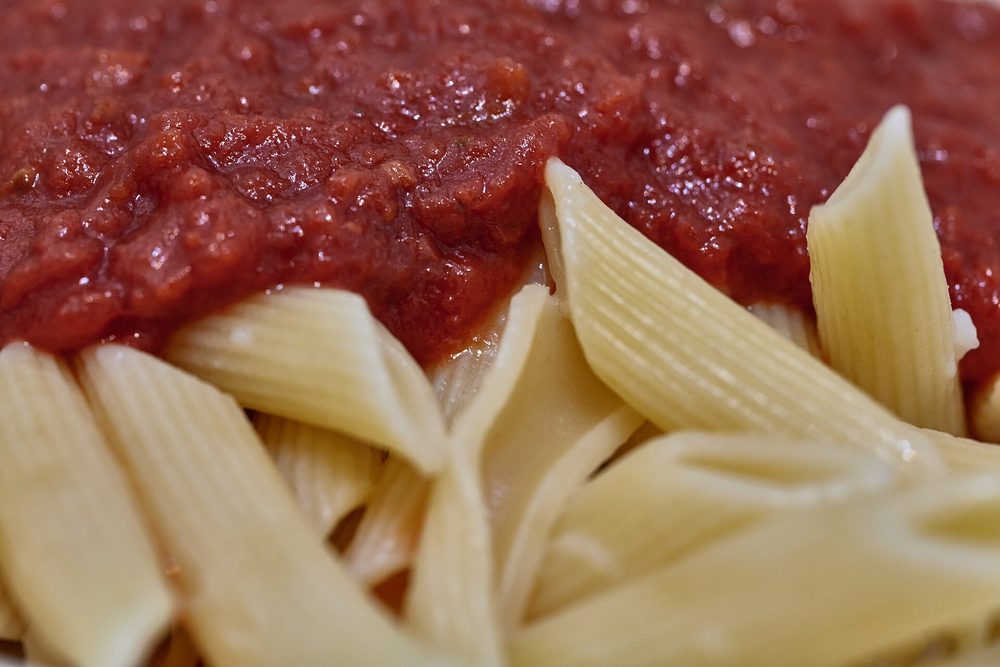
Emulsification & The Plate: Starch-Lipid Marriage
A sauce is only as formidable as its adherence to the extruded grain. A puddle of red oil left in the bottom of the bowl is an indictment of poor physics.
Both fighters depend on the process of mantecatura—the violent agitation of boiled pasta, cooking water, and sauce over heat. As pasta boils, water permeates the dense matrix of glutenins and gliadins, inducing starch gelatinisation. Amylose and amylopectin swell, burst their granules, and leech into the boiling liquid.
[ Agitation + High Shear ]
Pasta Water (Gelatinized Amylose/Amylopectin) + Fat (Olive Oil / Rendered Lard)
                          │
                          ▼
           Stable Oil-in-Water Emulsion
                          │
       ┌──────────────────┴──────────────────┐
       ▼                                     ▼
Arrabbiata Architecture:              Amatriciana Architecture:
Fragile, needs persistent heat.       Casein micelle stabilization;
Coats penne ridges via surface tension. forms impenetrable, glossy cling.
In Arrabbiata, this starch-water acts as a hydrocolloid surfactant, coercing the nonpolar olive oil into an oil-in-water emulsion with the tomato serum. Because olive oil remains liquid at room temperature and lacks animal proteins, Arrabbiata demands intense mechanical shear to achieve a glossy sheen. Ribbed tubular pasta like Penne Rigate is mandatory here; its extruded ridges (creste) offer mechanical surface tension to keep the fragile emulsion suspended.
Amatriciana, by contrast, possesses an unfair structural advantage. The rendered lard solidifies at slightly higher temperatures, yielding a more viscous emulsion. More importantly, when grated Pecorino Romano is folded into the starch-water and pork fat emulsion, its dissolved casein micelles act as natural, amphiphilic emulsifiers. The polar and non-polar amino acid chains of the dairy protein bind the pork fat directly to the water-based tomato reduction. The sauce achieves extraordinary clinging power, transforming thick strands of Bucatini into ropes of glossy, velvety red glaze.
The Arbiter’s Final Verdict
Arrabbiata is a vital, thrilling benchmark of Italian minimalism. When built with surgical precision—garlic brought precisely to pale blonde, dried pepper bloomed until fragrant, and sweet San Marzano pulp reduced to preserve its bright acidity—it cuts through winter lethargy like a scalpel. It is the ultimate quick-strike pasta, pure and furious.
Yet, gastronomy is ultimately governed by chemical complexity, structural stability, and structural flavor integration. In these realms, Sugo all’Amatriciana stands unrivaled.
Amatriciana captures every technical mechanism that elevates pasta cookery: deep Maillard synthesis, alcohol-mediated volatile extraction, the profound umami synergy between pork inosinates and tomato glutamates, and a rock-solid, casein-assisted starch-fat emulsion. While Arrabbiata excites the nervous system through sensory shock, Amatriciana conquers it through structural, lipid-driven culinary supremacy.
The championship belt remains firmly in Amatrice.